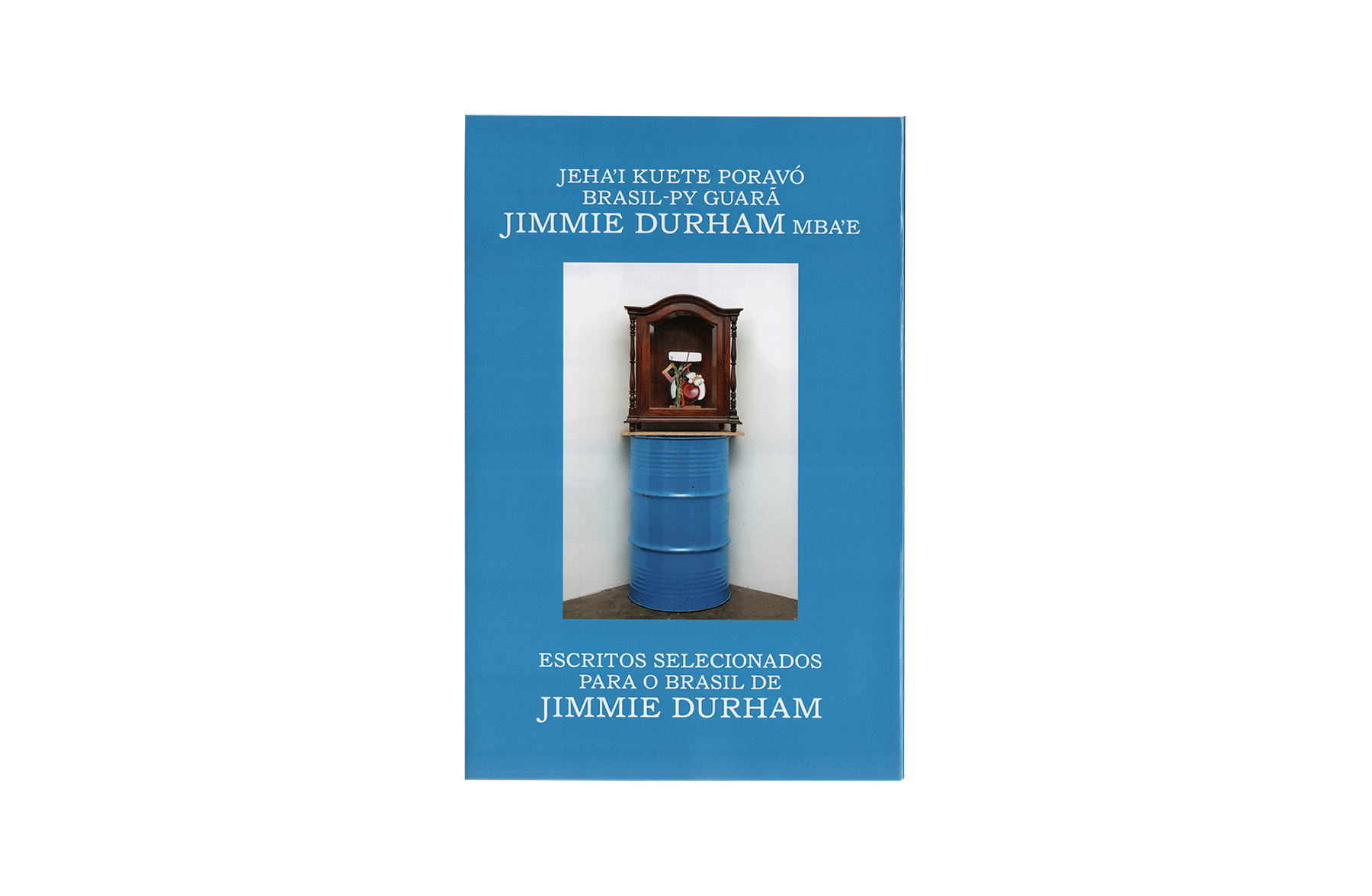
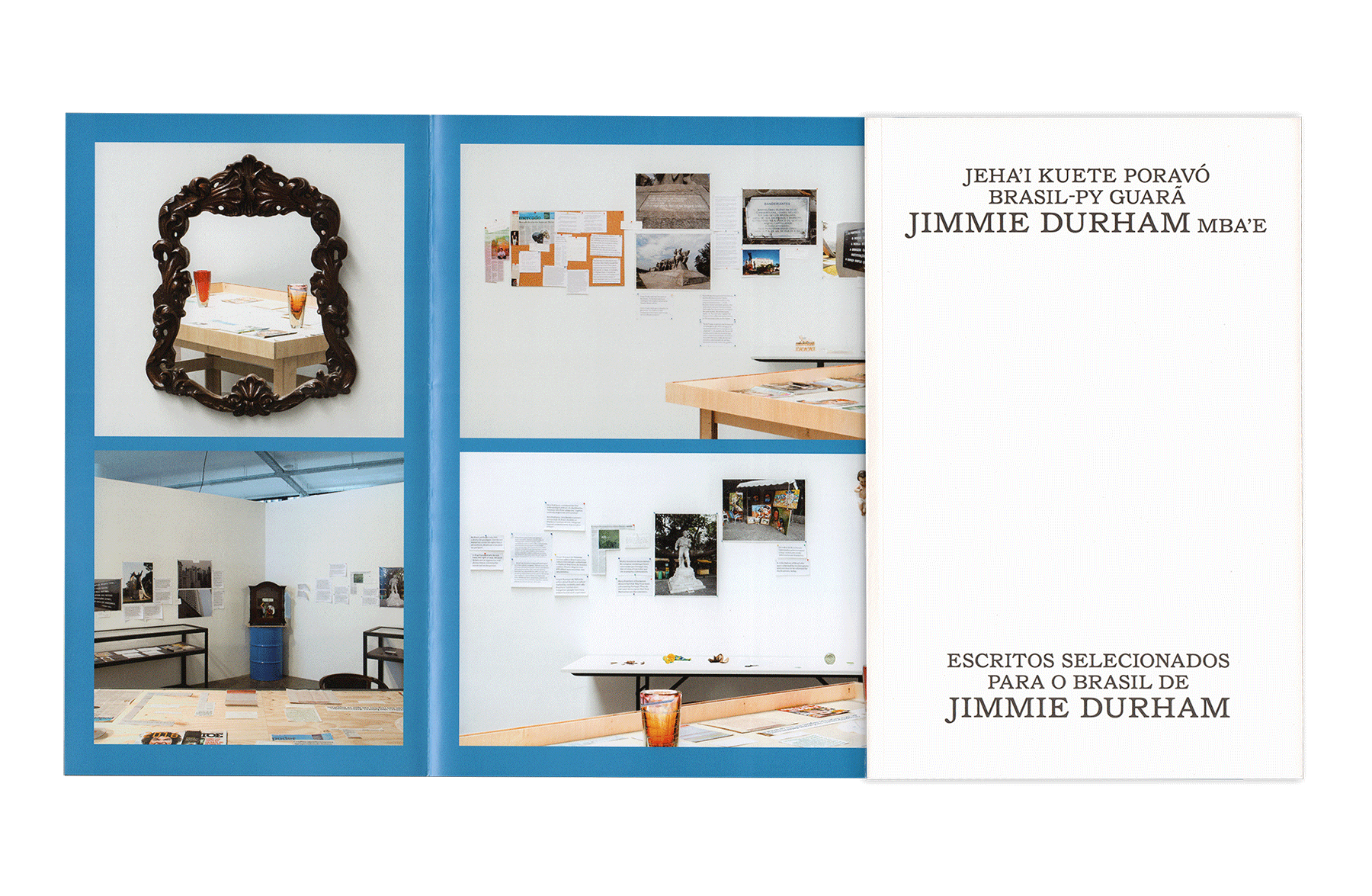
Escritos selecionados para o Brasil de Jimmie Durham – Jeha’i kuete poravó Brasil-PY guarã Jimmie Durham mba’e
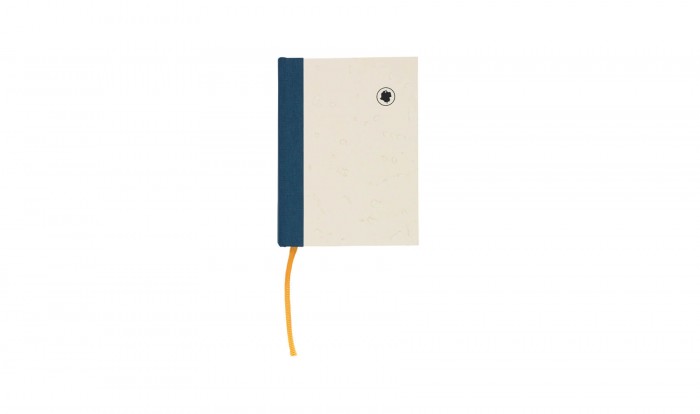
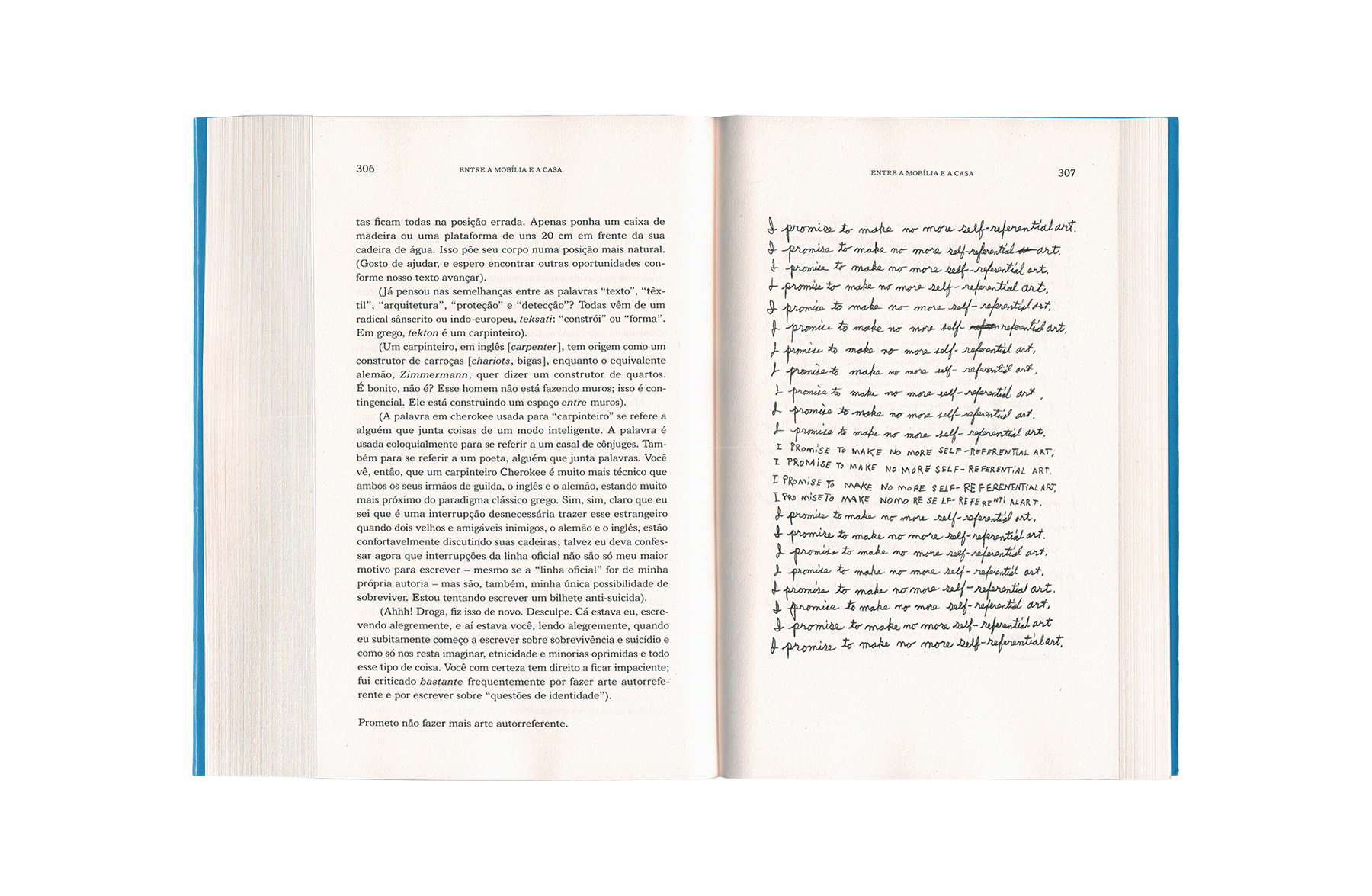
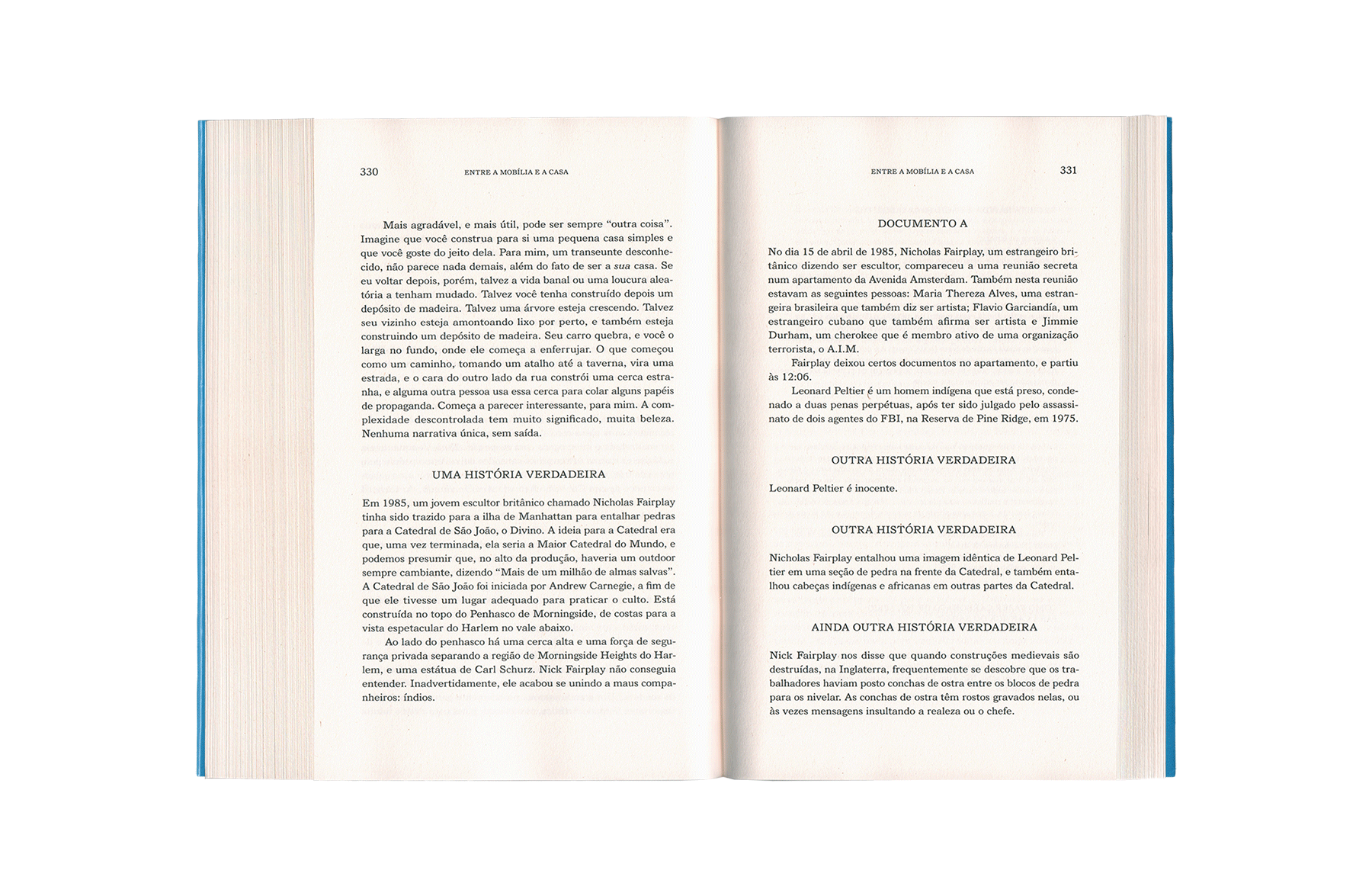
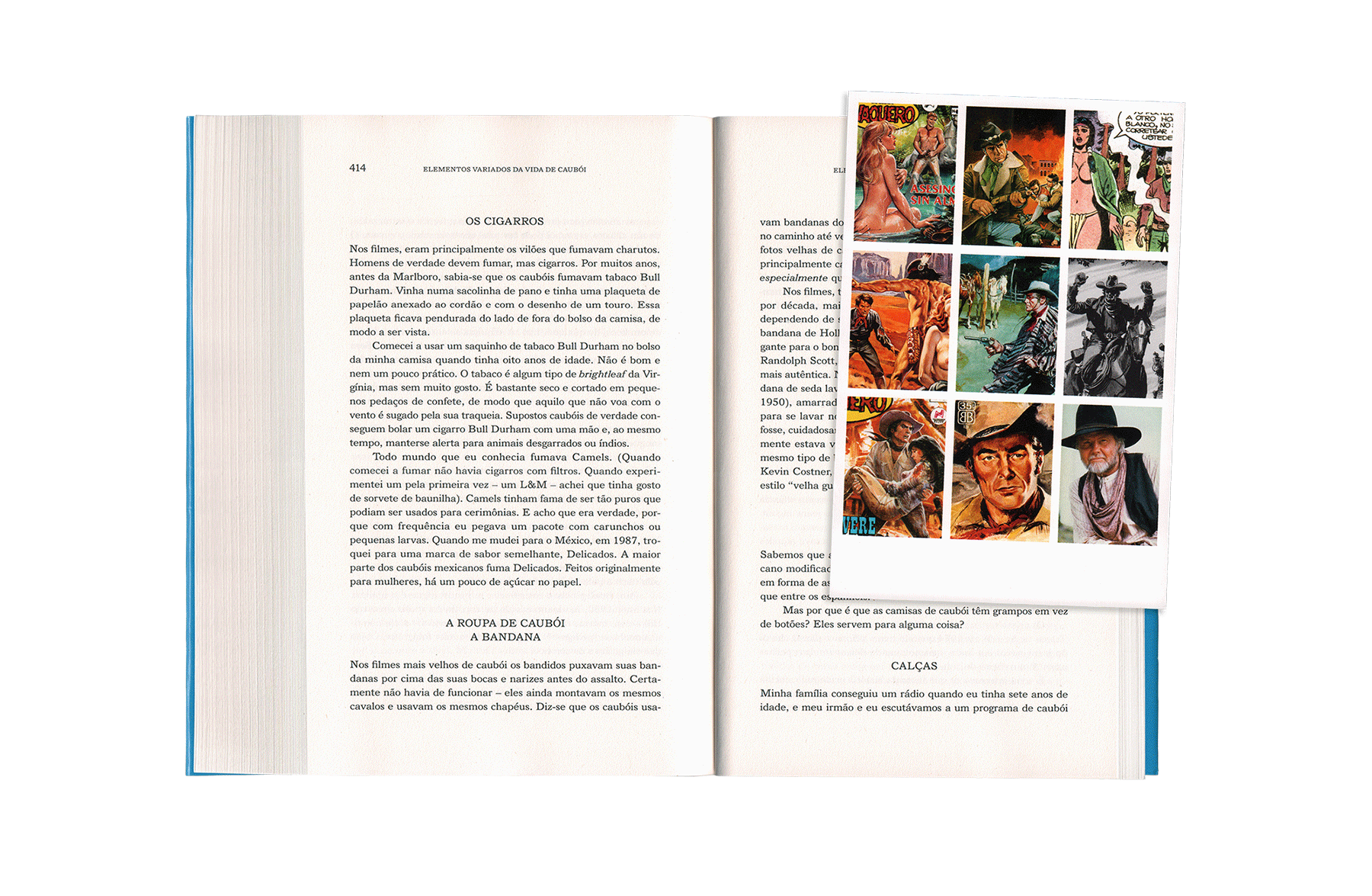
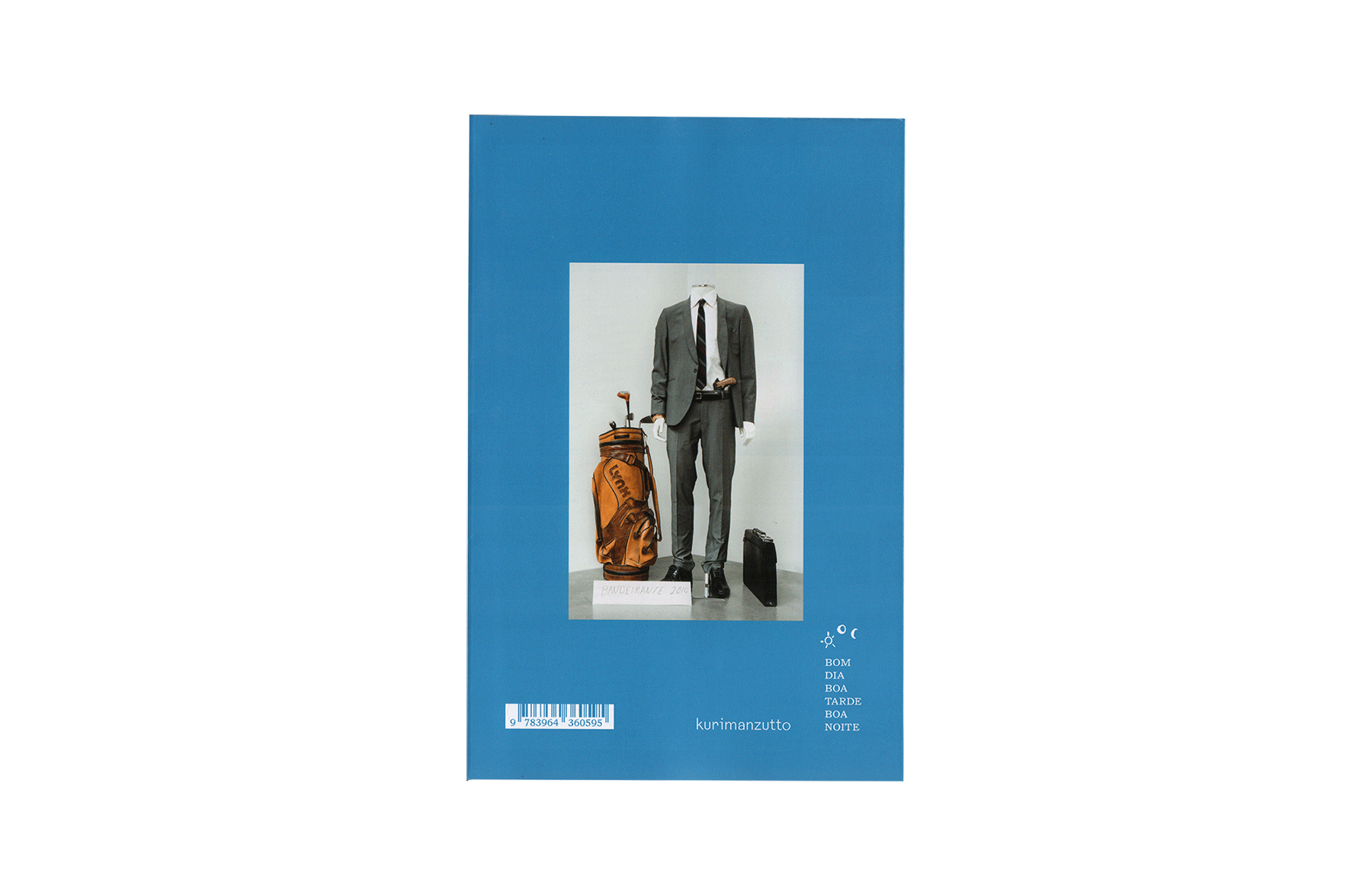
Although Jimmie Durham (1940-2021) lived in many parts of the world, his engagement and relationship with Brazil is outstanding. He travelled several times to Brazil, the first time in 2005 to give a speech and participate in the World Social Forum held in Porto Alegre. In 2012 he returned with his partner and decided to move to Ubatuba to engage with local communities and the colonial aftermaths’ at place – only health issues ended this process. The book offers for the first time a selection of essays (written between 1964 and 2012) which Durham himself chose for this publication to be translated into Portuguese and some also into Guarani. They all address different realms of being engaged within the colonised world and within the art world connected to it and the need to find a common and inclusive language within the discourse of contemporary art. Since Durham had planned to live in Guarani territory in Brazil, he also chose some essays which might be of interest to local Indigenous communities. Some texts question the history and myth-making of Europe in and of the Americas and the necessity to “be deeply suspicious of simple stories, simple acts”. Others deal with “the invisibility of ‘American Indians’ in the Americas” while some others are dedicated to Ludwig Wittgenstein and Robert Musil. There are essays on how nature and seasons make their way within a city, as well as ones which offer future concepts for the Eurasian continent. Within the variety of the essays we get a sense of Durham’s visions of what art and culture can be and which possible ways we can be responsible for.