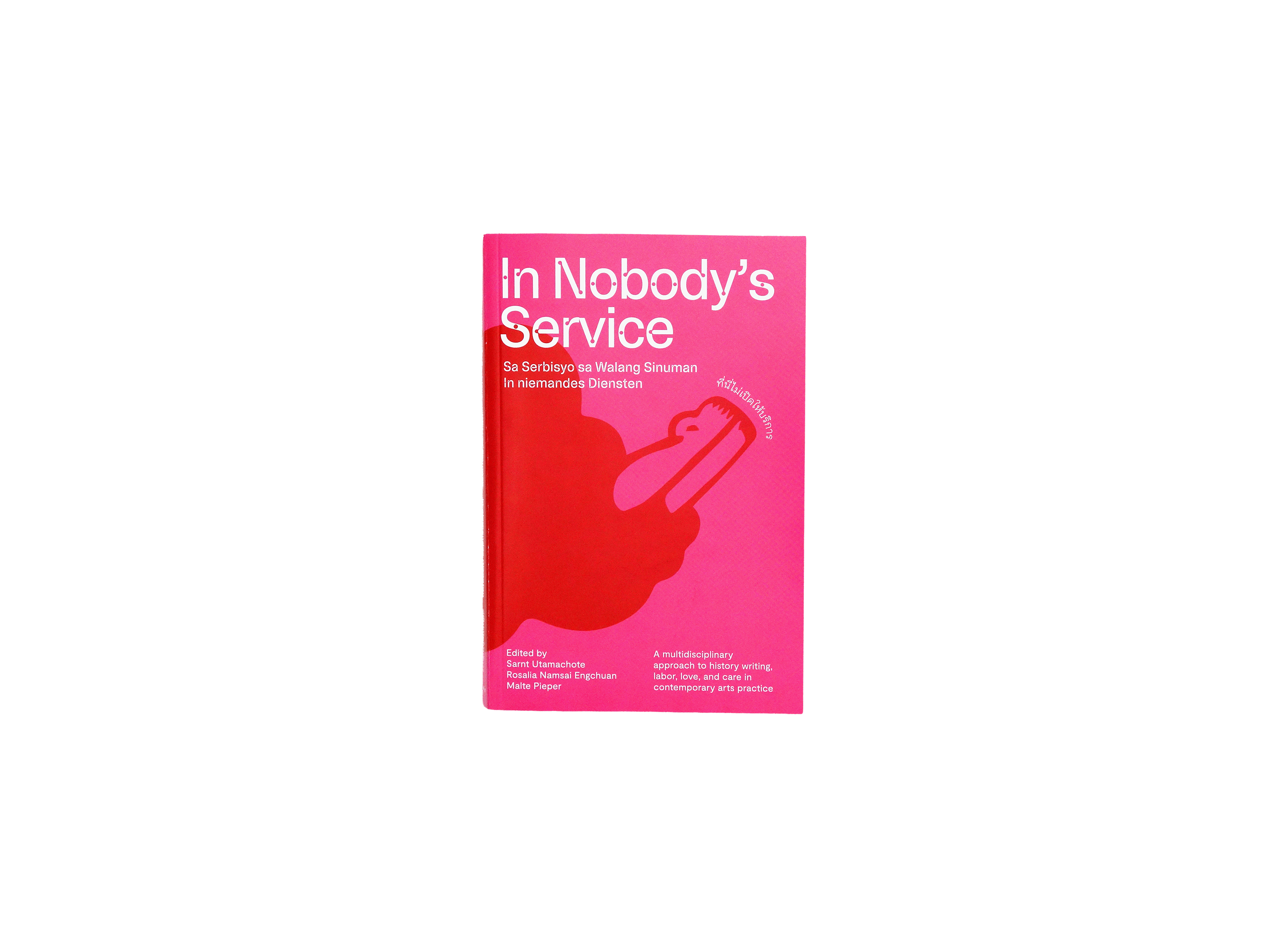
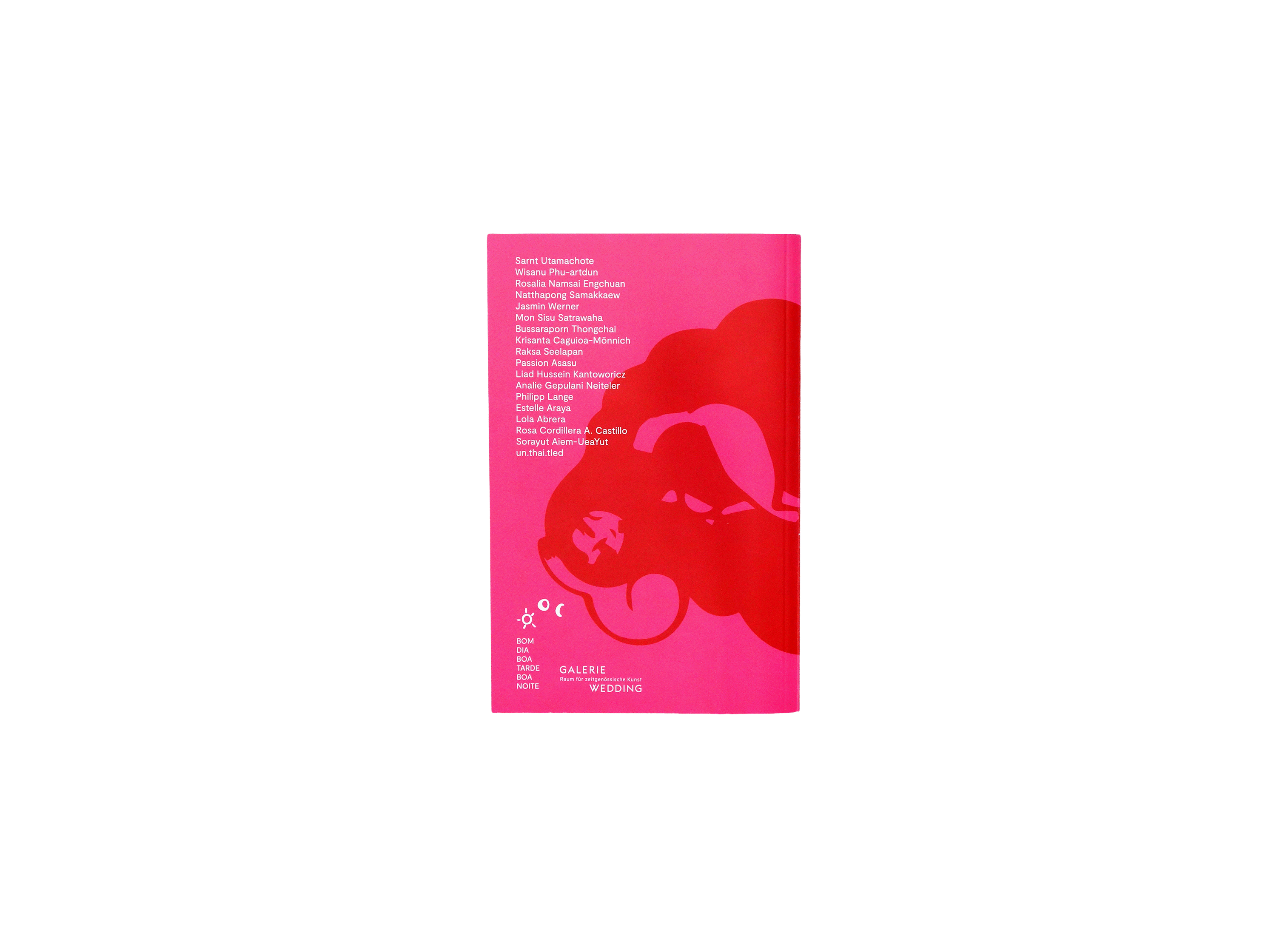
In Nobody’s Service ที่นี่ไม่เปิดให้บริการ In Niemandes Diensten Sa Serbisyo sa Walang Sinuman
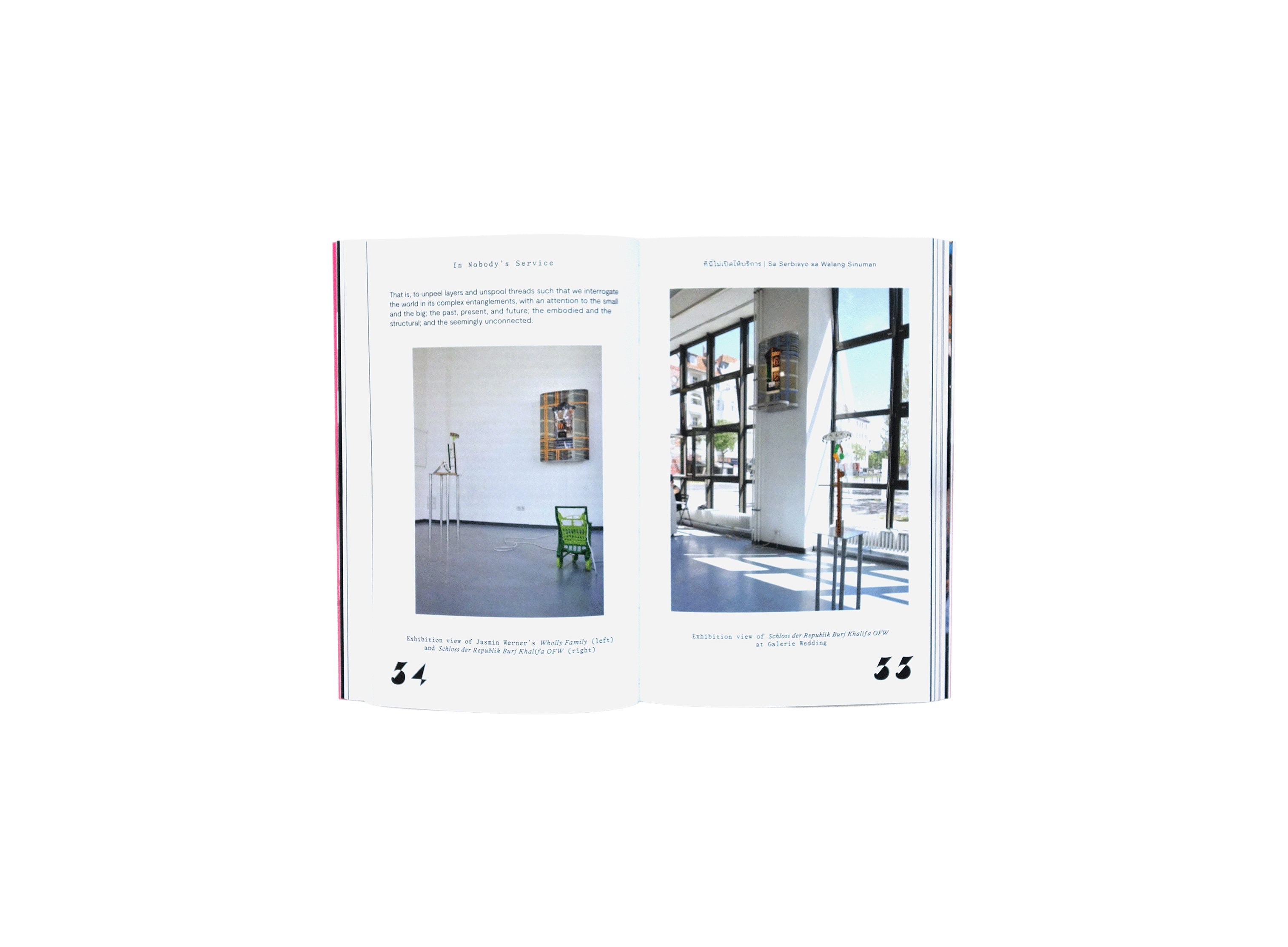
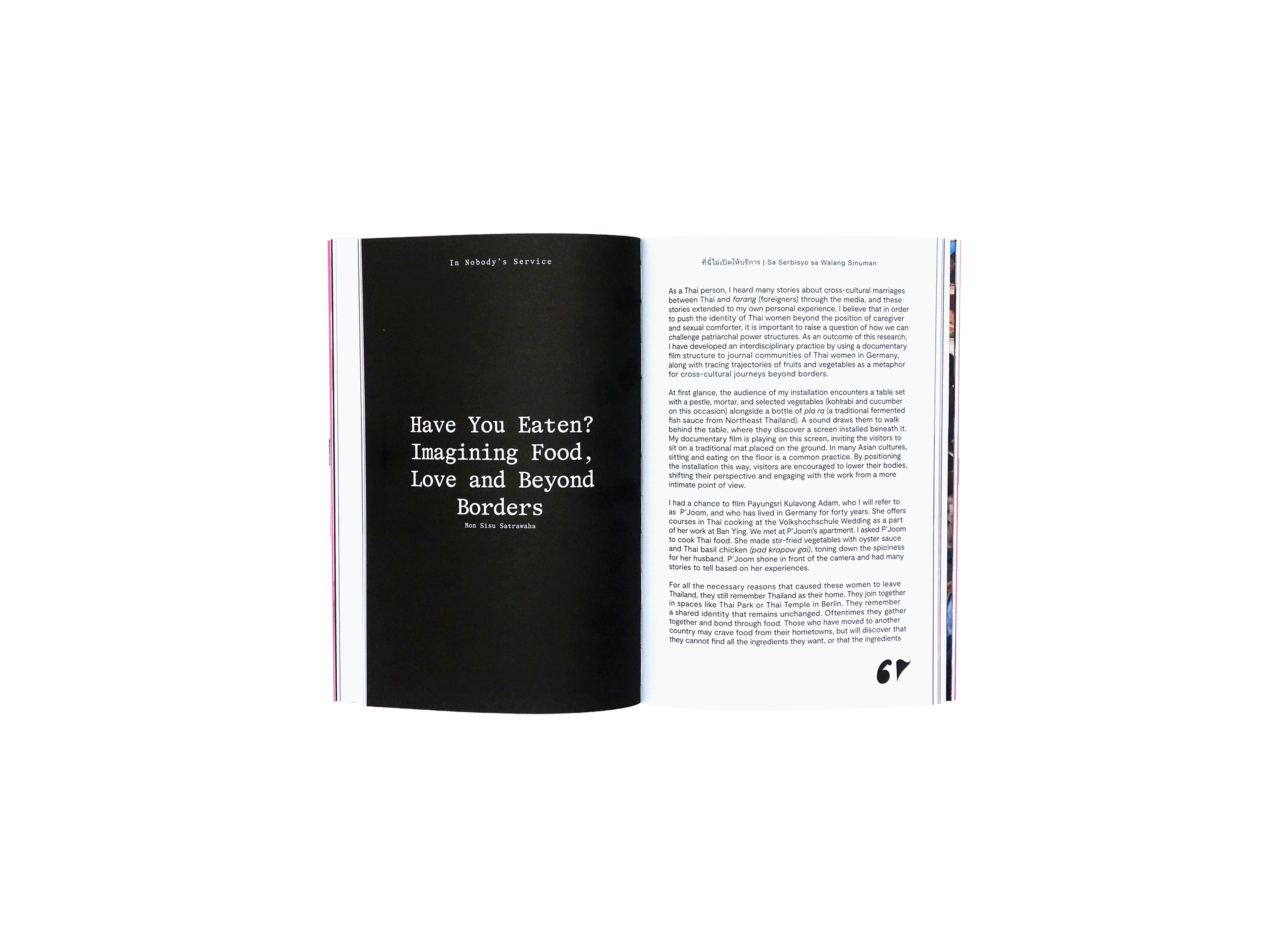
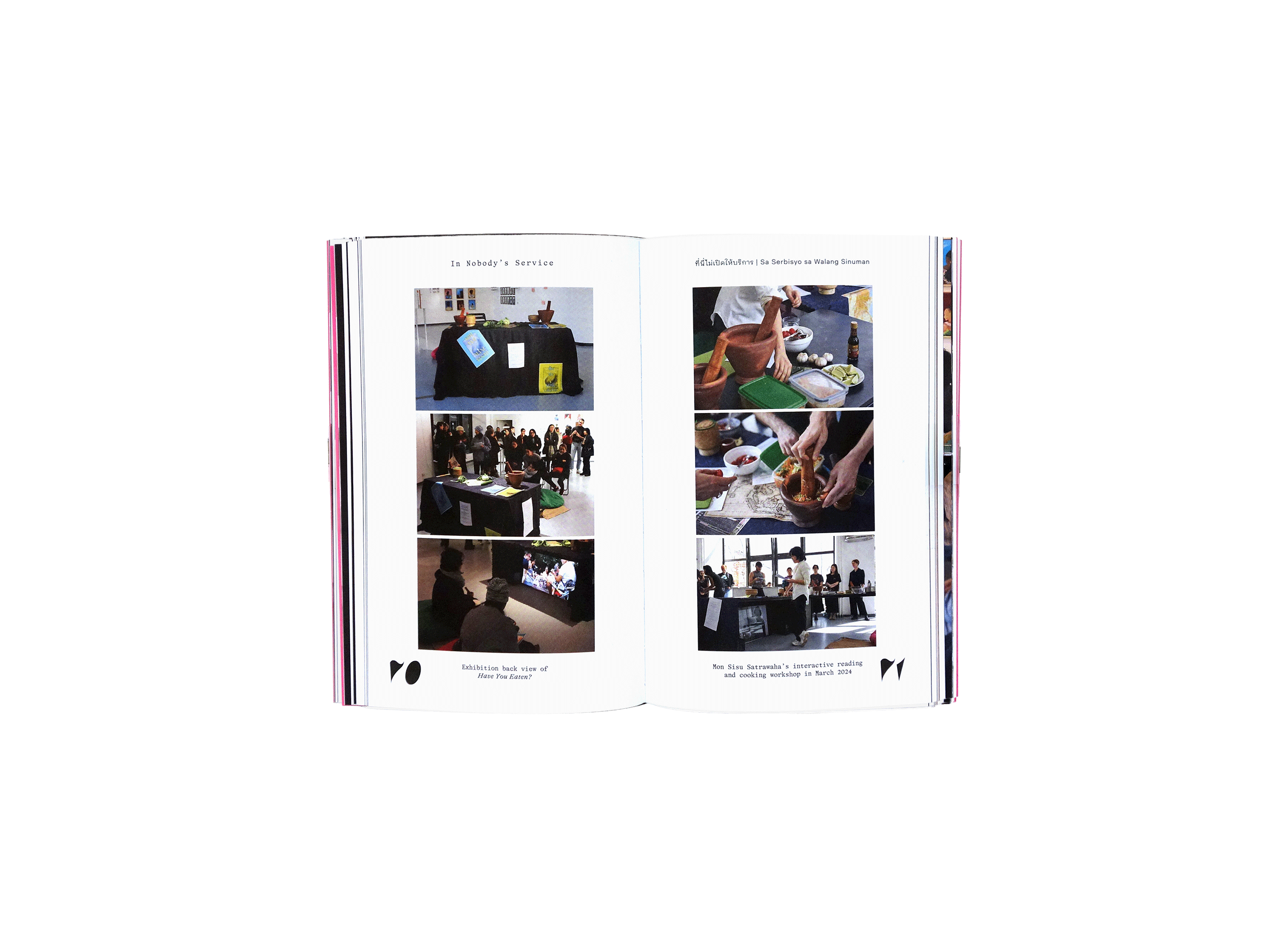
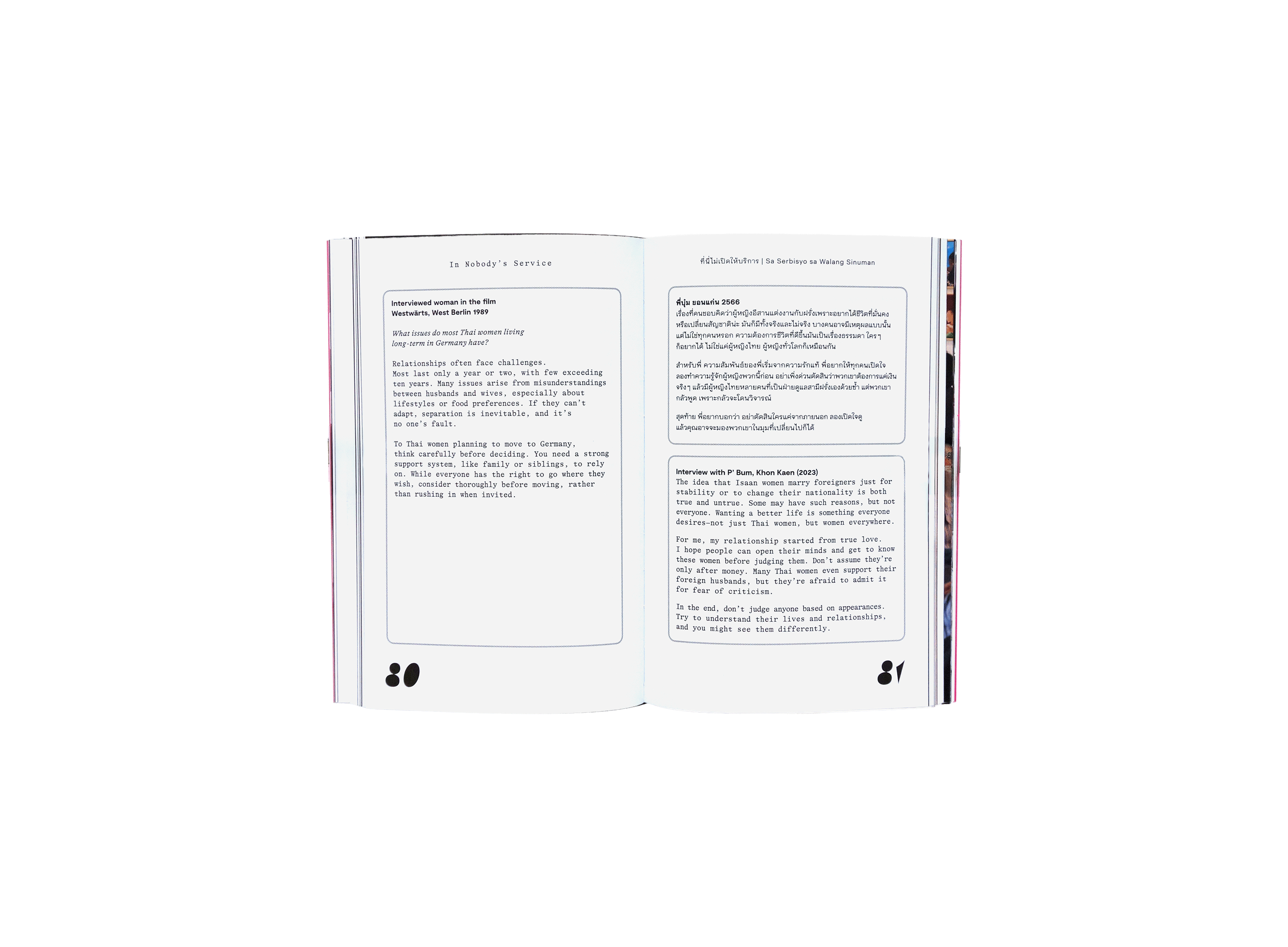
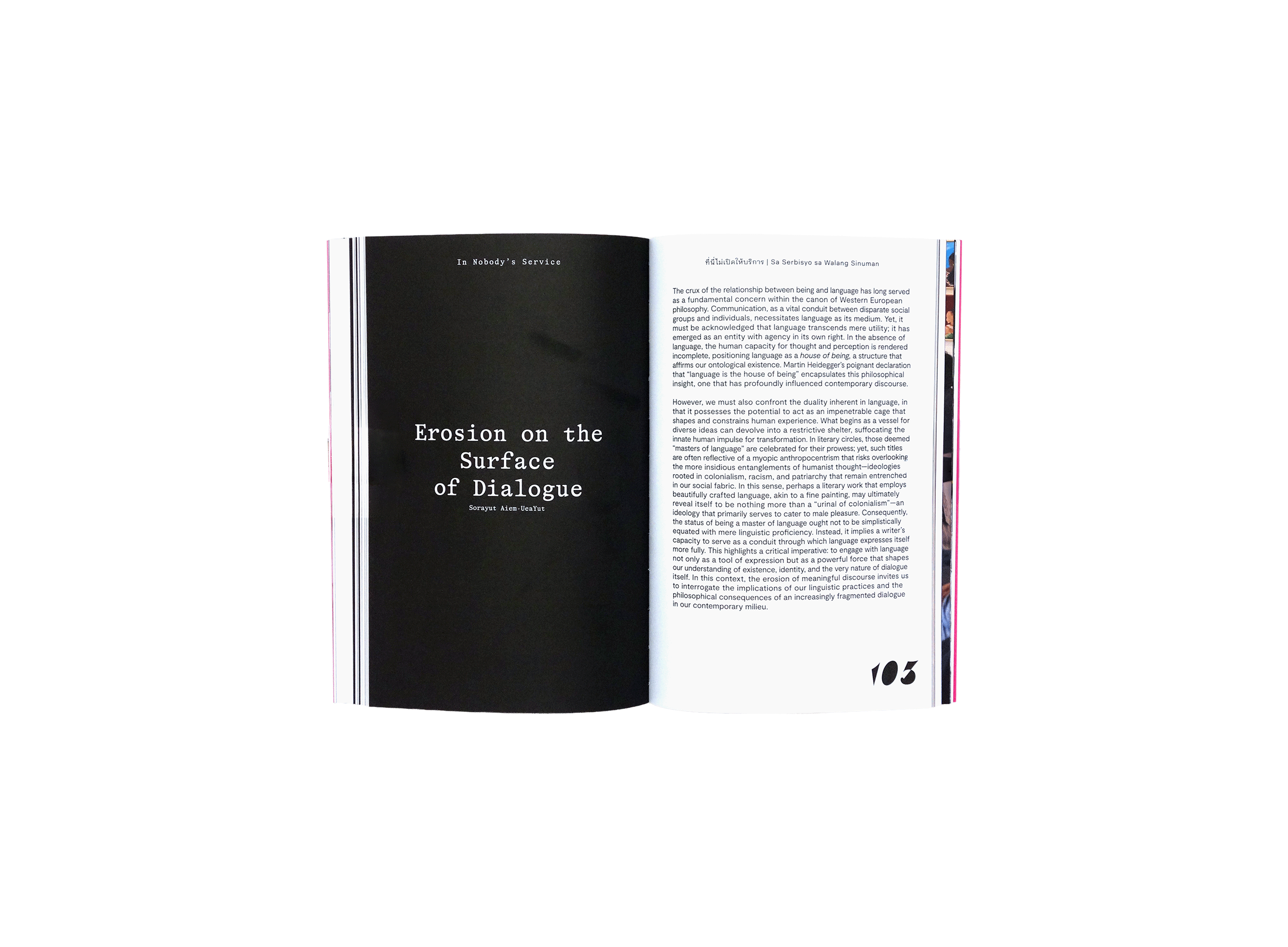
The publication documents and expands the group exhibition IN NOBODY’S SERVICE, curated by Sarnt Utamachote in collaboration with un.thai.tled collective as part of the POLY program at Galerie Wedding–Space for Contemporary Art, in Berlin, in 2024. By providing nuanced research and context to the works of the participating artists, the book creates a critical space to archive the exhibition and event program as part of diasporic artistic practice in Berlin and beyond. It addresses historical entanglements, transnational histories of migration and the relationships between the artists and communities surrounding them. Commissioned writers (Lola Abrera, Estelle Araya, Sorayut Aiemueayut, Rosa Castillo and Philipp Lange) contribute essays thinking with and about the individual artistic positions.
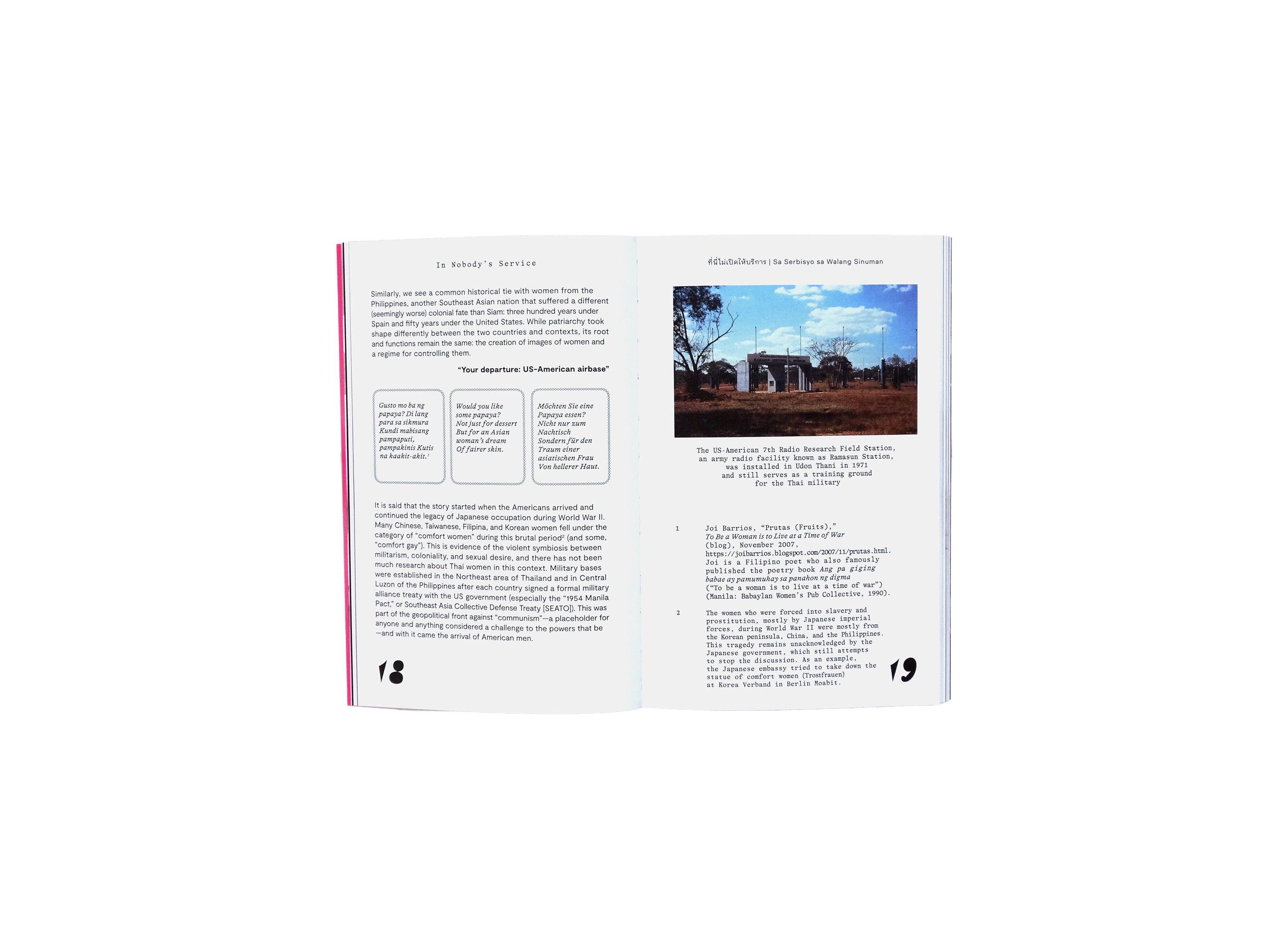
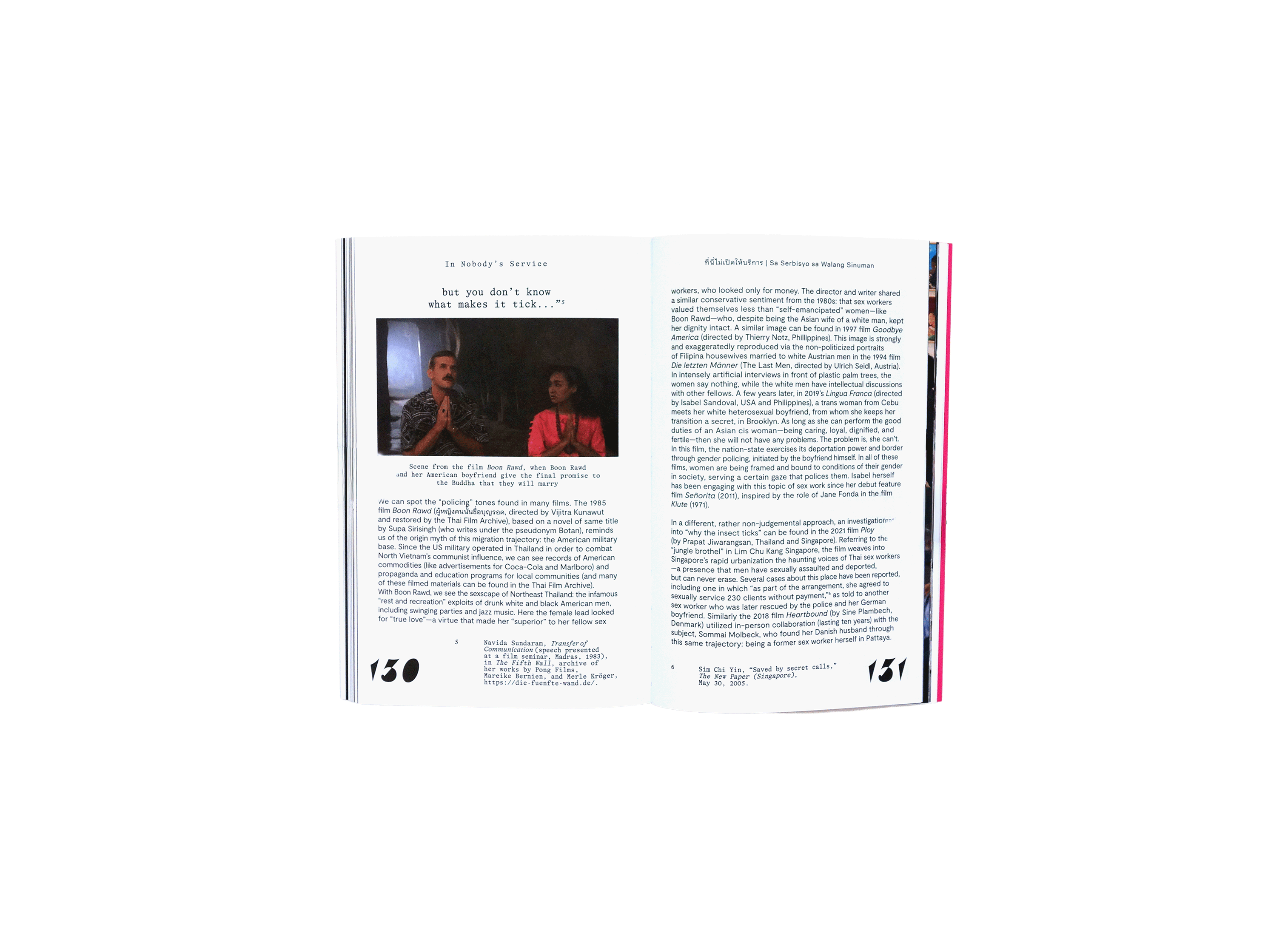
Migration histories from Thailand and Philippines to the West have been shaped by US-American influences and colonization in the region. West Germany’s interests in tourism and developing labor exchanges—of sex, care and the reproductive industry, gave birth to the marriage agencies in Berlin linking husband and wife together, cheap maid agencies across developing countries, the brothels and massage salons in Frankfurt am Main and Hamburg. Here, bodies have been rendered to mere “providers”. Such oppressive spaces can be subverted into places of care, comfort, and knowledge. The phrase ที่นี่ไม่เปิดให้บริการ is a play on language, meaning either “this place is not open for service” or, literally, “for nobody’s service.”
The artistic and scholarly research projects presented in this publication depart from the extremely violent, cliché images that are often projected onto Thai and Filipina women’s and queer bodies. IN NOBODY’S SERVICE is a refusal to perform within the bounds of these constructs and an attempt to reclaim complexity and fluidity of being. This publication brings the Thai collective un.thai.tled together with Filipino diasporic artists, and, in doing so, allows the past, entangled with the present, to serve as material for artistic collaboration. Notes from conversations, archival material, poetry and songs in Thai, Tagalog, German, and English resonate throughout this book. Following a collective, interdisciplinary, and research-based approach, this publication blends artistic with documentary practices to offer a space of reflection. Strategies of self-organization that have been developed in artistic, migrant, and activist spaces serve as tools for resistance, empowerment, and collective action.